Sunday, November 26, 2017

BEYOND MAGENTA

Image result for Beyond magenta

SK: What causes a person to be transgender? 

MS: I think the question should be flipped around: What’s the cause for assuming that one’s gender identity has to be the one that you are born with? When I first came into this job, I was much more comfortable about people’s sexuality than I was with people’s gender identity. But when you hear the same stories over and over again, from people from all over the world, you start realizing that transgender is not an anomaly. It’s a part of the spectrum of people’s realities. Then you stop wondering about the cause and you start realizing it’s a part of reality.” 


GRADE LEVEL: 7-COLLEGE
AUTHOR: SUSAN KUKLIN 
GENRE: NON-FICTION

REVIEW: 
Beyond Magenta shares the true stories of six transgender and gender non-binary teens. Susan Kuklin's gives voice to the challenges, triumphs, and diverse stories that these teens take on their way to living their truth. Kuklin understand's that the most powerful voice to tell these stories are through the teens who are living them. Each chapter focuses on the unique individual journey of each teen. Pictures, interviews with loved ones and family, and words from the courageous teens themselves, encourage the reader to gain a deeper understanding and empathy for the young adults who are so courageously telling their stories.

Beyond Magenta is a book that can be used in the classroom either in its entirety or through the individual chapters. This multi-genre approach to storytelling is a wonderful way to expose students to the different ways to tell a story. What a great book to use as a model for their own multi-genre pieces while also teaching students about a subject that impacts their peers or even possibly the student. I can see some great cross-curricular opportunities with the art department with this one! At the end of the book you will find a nice glossary of terms that can be helpful to understanding some of the gender inclusive language and some of the harder to understand terms used. I also really enjoyed the resource section at the end of the book that some of the students who are LGBTQ might find useful.

CLASSROOM  TOOLBOX:

  • As mentioned above: have students create their own multi-genre pieces that use art, interviews and self-reflections as modes of storytelling. Get with your art department to help you with ideas!
  • Interview someone else and create a multi-genre piece or piece of photojournalism based on that person. 
  • Research a person in history and tell their story using Beyond Magenta as a model. 
  • Bring it to your GSA (Gender and Sexuality Alliance Club) It would be a great book to share with the group and possibly read together. 
  • Put it in the teacher's room. It would be nice for teachers to gain a better understanding of some of the challenges facing their transgender and non-binary students. 
LINKS TO OTHER TOOLBOX IDEAS AND RESOURCES:
FEEL FREE TO SHARE YOU OWN IDEAS AND CREATIVITY WITH US!

Monday, November 20, 2017

GEORGE


Related image


  “Trying to be a boy is really hard, Mom” 


GRADE LEVEL: 3-7
AUTHOR: Alex Gino
GENRE: FICTION

REVIEW 
George is a story of a young ten-year-old girl who wants to be know for who she really is, Melissa. Unfortunately most of her classmates and community members know her only as a a boy named George. When the teacher announces that the class will be performing,Charlotte's Web, Melissa(George) sees it as an opportunity to play Charlotte and to show the world who she really is. When the community is not supportive of Melissa's decision, she finds friendship and an ally in her classmate, Kelly. With Kelly's support Melissa emerges as her true-self.

Ultimately, this book is about more than the bravery of a transgender girl; it is about friendship, challenges, and living your truth. My son and I read it together, and I was so relieved that Alex Gino referred to the main character with the pronoun she throughout the book. I don't always see this in literature, especially when the character is right before, or in  the middle, of a social gender transition; but I think it allows the reader to follow Melissa's truth so much better. My son also has little tolerance for misgendering, and I feel he would have a hard time reading it, otherwise. We had wonderful conversations sparked by the events in the book and the the main character's journey. 

I can see this book being a hit as a classroom book in middle school. Will you get push back from the occasional feisty parent? It is very well possible, but we are teachers and we are used to the controversy of great literature. Just put this book on a list with many other books that has the potential to create positive change. The book already has been used in classrooms around the world, so you should find lots of ideas in the classroom toolbox. If you have used in it your classroom, I would love to hear more! 

CLASSROOM  TOOLBOX:

  • Compare the themes in Charlotte's Web with those in George. There are some great comparison matrix out there.
  • See if the author will come for a visit! I found this link from Scholastic that speaks in particular about Alex Gino's school presentations. How amazing would that be?!
  •  If this is not an option, than maybe trying writing letter's to Alex that encourage students to use critical thinking questions. Check out the Letters About Literature contest for this age group. I have done this contest in the past with great results. 
  • Use Storybird.com to have students write their own books with similar themes. Compare the books when you are done. 
  • Use the discussion as an opportunity for talking about ways students can promote a safe classroom school environment. Maybe brainstorm what it means to be safe. Try getting your school guidance counselor involved with lessons. Some classrooms create a class constitution together. This maybe a great time to revisit the constitution to see if there are any other ideas to add. 
  • It would probably be a good idea to visit classroom discussion expectations before speaking about transgender issues. I highly believe the more educated the teacher on the subject, the more positive and effective the conversation. Start by reading, The Transgender Child: A Handbook for Families and Professionals by Stephanie Brill.
  • Create a book trailer using digital writing techniques. Highlight the themes in the book. 
  • Have students write in they/them pronouns. When you create a prompt, make they/them an option and model this for them. 
LINKS TO OTHER TOOLBOX IDEAS 

FEEL FREE TO SHARE YOU OWN IDEAS AND CREATIVITY WITH US!

Sunday, November 12, 2017

The Singular Pronouns They/Them and Why It's Important We Use Them


It is more uncomfortable for our students to be misgendered than it is for us to begin to use language we are not use to.

So I am going in a bit of a different direction for this post. There will be no particular piece of literature that I will refer to, but I wanted to cover the topic of they/them as a singular pronouns. I have noticed it is an area that educators, especially us English teachers, are getting hung-up on.You will find many articles and resources in the Classroom Toolbox that will help guide you through the topic.  

As a society we are programmed to see the world through a binary lens when it comes to gender. Even as we start to make progress toward a more accepting and educated society regarding transgender issues, many of us, even well-meaning educators, still have a hard time seeing gender as a fluid spectrum. I can't tell you how many teachers have said to me, "I can get behind the whole transgender issue, but I have such a hard time using the pronoun they as singular." Teachers can be the worst at this because when it comes to grammar, we feel we have to stick by the "rules". With a little research, we can come to understand that the "rules" have historically favored the singular pronoun they. Even if it didn't, we need to accept the idea that language changes as society changes. In fact, in the US, we don't have an official language committee that governs our language rules; it is often society that makes the rules as our culture and language needs change.

Why is it so important that educators become comfortable using the gender neutral pronouns they/them? Because it is more uncomfortable for our students to be misgendered than it is for us to begin to use language we are not use to. It is that simple. For a student who does not identify as either a female or male, it can be emotionally traumatizing when they are misgendered. We need to recognize and respect our students for who they are. The real change begins when we actually start using they/them as singular pronouns. Start practicing and it will begin to feel more like a part of your daily language.

CLASSROOM TOOLBOX:

  • We all mess up! When you do: acknowledge it, apologize and mean it, and make an effort to continue trying your best.
  • Start including they/them as singular pronouns when you create writing prompts. I often give my students the choice of his/her/they when I create a prompt that includes pronouns. 
  • Get writing ourselves. Write using the pronouns they/them in your own writing. Try writing to the same writing prompts you give your students and chose they/them pronouns. Read the writing aloud to yourself. 
  • Read articles and stories that use they/them pronouns. There is a great book that I hope to review on this blog, Beyond Magenta  that highlights the journeys of gender fluid youth. The chapter, "NAT: Something Else " is a wonderful story of a person who uses they/them pronouns. 
  • Use the stories mentioned above as model material in your classroom. Don't shy away because of comfort. Students need us to use model text that is more inclusive and to normalize these pronouns for everyone.
  • Here is a great article that gives tips on how to ask students their pronoun respectfully.

LINKS TO OTHER TOOLBOX IDEAS:
All Your Questions About Gender Neutral Pronouns Answered 
Tips for being an Ally that Respects Pronouns
Washington Post/They is the Word of 2015


Wednesday, October 25, 2017

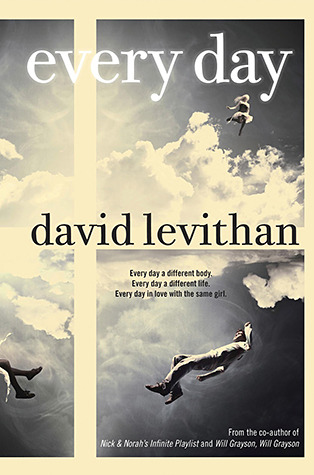
Every Day


Image result for Every day book cover


It is a hard cycle to conquer. The body is working against you. And because of this, you feel even more despair. Which only amplifies the imbalance. It takes uncommon strength to live with these things. But I have seen that strength over and over again.” 

GRADE LEVEL: 9-12
AUTHOR: David Levithan 
GENRE: FICTION

REVIEW 
Every Day is a story about a person named A. This person has jumped into a different body each day of their life. They have been every gender and every race, but have aged normally, only jumping in a body that would be the same age as A. The book opens when A is the body of a sixteen-year-old boy, this is also the day that A falls in love for the first time; her name is Rhiannon. All love is complicated at some point, but because A lives in a different body every day, they struggle with showing Rhiannon who they really are despite the complications of being in a different body. I think this story will appeal to a wide audience of readers. Although, the book doesn't specifically address a transgender theme, it does open a reader up to discussions about identity and to the idea that someone's identity does not always match the body they are in. 

I was super excited to read this book and fell in love with the plot before I even began to read it. It quickly became the book I couldn't put down. I immediately told my high school students about it and many are interested in reading it. After talking with my students, it became clear to me that this was a book that would appeal to large variety of students. I think it is a book that is accessible to a lot of people which allows teachers to create discussions around identity without putting the spotlight on the trans community. There are some companion books, an upcoming sequel, and a movie in the works for those that fall in love with the characters.


CLASSROOM  TOOLBOX:

  • Here is a link to some of the CCS that I think will work well with this book. If your school has adopted other standards, I think the crosswalk should be fairly easy. I did grades 9/10, but I think it could be read in 11/12 as well. 
  • What about creating a multi-genre project around the theme of identity. The student could take on the persona of one of the characters in the story and explore the conflicts. themes, and motivations of the character and then reflect them through different genres of writing. I am sure there are many creative ways to take a multi-genre approach with this project and it kind of compliments the plot of the book. 
  • Students could write a play or short=story that explores the theme of identity through their own characters. 
  • Students could create a trailer for the movie. You could give give them instructions to show the audience glimpses of characters, conflict, and theme. 
  • Students could create a digital story for the book. It is basically a retelling of the book using digital media techniques. 
LINKS TO OTHER TOOLBOX IDEAS 

Sunday, October 15, 2017

I AM JAZZ


Image result for i am jazz

"I have a girl brain but a boy body, this is called transgender. I was born this way!"
"Pretending I was a boy felt like telling a lie."

GRADE LEVEL: PRE-K-3
AUTHOR: Jessica Herthel and Jazz Jennings
ILLUSTRATOR: Shelagh McNichols

REVIEW 
I am Jazz is a nonfiction children's book that is told from a young transgender girl's point of view. Jazz's first-person account shares her journey in this children's book rich with inviting illustrations. A reader has the feeling as though Jazz is there with them, telling the story of what it means to be transgender. Her story is simple for children to follow and clearly explains terms, like transgender, in a way that young children can grasp. Jazz Jennings is one of the first younger transgender children to share her story publicly. She has become a role-model for many children who share her similar struggles. 

This is a popular book in my house right now. After getting it from the library, I read it to my children(6 and 8). Now my daughter asks me to read it to her every night, and my son just recently read it to his cousin. It has been a joy to see the connections my daughter makes with Jazz as she feels they have a lot in common; they both like soccer, mermaids, and dressing-up in princess clothes, but she also feels for Jazz and will stop to ask me questions when Jazz shares her feelings of not being accepted for who she really is. I listened to my son read the book to his cousin and was very interested in the conversation that followed. I sat close by ready to facilitate the conversation if I felt I needed to. They discussed what it meant to be transgender, and I just listened as they worked it out between the two of them. His cousin wanted to know how Jazz grew her hair so long. They both giggle when my son replied, "The same way you did, Silly!"

Children in younger classrooms will enjoy the beautiful illustrations that accompany the story and make this book and its topic easy to understand. Jazz shares her feelings of trying to communicate with her family and school, but still feeling very misunderstood. Students may have questions about what it means to be transgender and this book will help them to understand in a way that is age-appropriate. It will also help them to feel empathy for children who are going through something hard in their life at such a young age.This book has been used in many classrooms already so there seems to be quite a bit of resources on the web.

CLASSROOMTOOL BOX
  • This book makes for a great read-aloud. The discussions that follows will be rich and meaningful-stop and ask questions along the way. Under the links there are some great discussion questions. 
  • It might be great to invite someone from the community to come in and aid with the discussion and the terms in the book. This might be a counselor at your school who has been trained in gender issues or a local community LGBTQ advocate who can answer student questions. 
LINKS TO OTHER TOOLBOX IDEAS 
I am Jazz lesson plan from Welcoming Schools. 
I am Jazz Lesson Plan from Healthier Self
I am Jazz Lesson Plan and Resources
A Look at I am Jazz in the classroom and links to her reading the book

I WANT TO HEAR WHAT YOU THINK. WHAT IDEAS DO YOU HAVE?


Monday, October 2, 2017

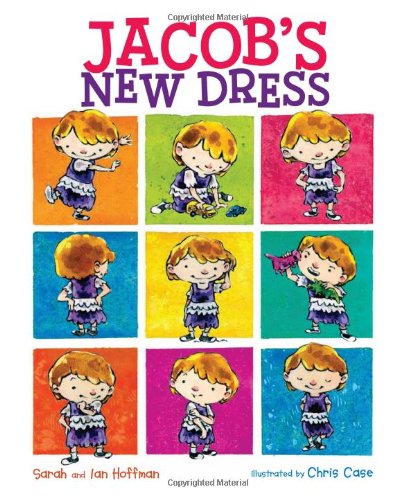
JACOBS'S NEW DRESS PRE-K-3

Image result for Jacob's New Dress"


"Why does Jacob wear dresses?"interrupted Christopher. 
   Ms. Wilson paused. "I think Jacob wears what he's comfortable in just like you do. Not very long ago little girls couldn't wear pants. Can you imagine that?"


GRADE LEVEL: PRE-K-3
AUTHOR: Sarah and Ian Hoffman
ILLUSTRATOR: Chris Chase

REVIEW 
Recently I attended a gender reveal party. Two giant balloons were filled with either blue confetti or pink confetti. When popped, the confetti would tell family and friends gathered that in five months or so the parents could either expect a boy or a girl based on the color confetti. It seems crazy to me that we are assigning colors and gender expectations on our children before they are even born. We wonder why it is so hard for us to wrap our minds around a boy wanting to wear a dress or a girl who loves trucks, but we have conditioned ourselves to such strict gender conforming roles that we have left no room for our children to step outside our expectations. There is no genetic disposition that states any person must love certain colors and clothing styles.So what happens when a boy walks into your classroom wearing a dress?

Jacob's New Dress allows students to understand that it is okay to bend or-heck-break the gender rules. Sarah and Ian Hoffman have created a story that centers around a young boy, Jacob, who knows exactly what he wants--to wear dresses. It is the people around him that have a hard time understanding a boy in a dress. Thankfully Jacob's mother is supportive and makes a new dress for him to wear to school. Through Jacob, those in his life, including a bully in his class, are able to begin to understand that, yes, a boy can wear a dress.

Chances are that you will have students that will identify as gender non-conforming. Jacob's New Dress is the prefect book to initiate a conversation about respecting people's choices, stereotyping, and allowing students the freedom to explore gender roles. The topic of bullying will be a theme the students will react to and, it will be a great opportunity to discuss how we treat other people. 

CLASSROOM TOOLBOX
  • This book makes for a great read-aloud. The discussions that follows will be rich and meaningful-stop and ask questions along the way. Under the links there are some great discussion questions. 
  • The students could write a review of the book or even do a video book review. 
  • Create a public service video with messages the students write about bullying.
LINKS TO OTHER TOOLBOX IDEAS 
A lesson plan for Jacob's New Dress
Discussion Questions
Lesson and Discussion Questions

I WANT TO HEAR WHAT YOU THINK. WHAT IDEAS DO YOU HAVE?


Monday, September 25, 2017

BECOMING NICOLE:THE TRANSFORMATION OF AN AMERICAN FAMILY 9-COLLEGE LEVEL


Image result for becoming nicole the transformation of an american family


"Dignity, self-respect, the right to be treated as an equal, that’s what everyone wants. But Du Bois knew that those who are alienated from the community of man because of color (or, one might add, because of sexual orientation or gender) have a much harder path, because the alienated, the differentiated, the misfits of society must bear the burden of a single unspoken question on the lips of even the most polite members of society: “What does it feel like to be a problem?” 

GRADE LEVEL: 9-12
AUTHOR: Amy Ellis Nutt 
BOOK AWARDS: 
A New York Times Best Seller
A New York Times Notable Book
A Stonewall Honor Book in Nonfiction
A Finalist for the Lambda for Transgender Nonfiction

REVIEW 
When I was writing the award list for this book, I wanted to give it one more unofficial award: The Award for the Book Most Recommended to Those Wanting to Understand Gender Identity. Yes, it is a long name for an award, but it is one that holds so much meaning. It is even rumored that the Pope was seen reading it on a plane. For me, the story hits a personal note as it is set in the same town that I lived in when my children were born. I am embarrassed to say that, at the time, I was grossly unaware of the prejudices of my community and what impact the outcome of the trial would later have on those that I love. 

Someone once asked me how the classic, To Kill a Mockingbird is still relevant for students. For starters, I don't think American society has changed all that much since Harper Lee's depiction of a small town confronted with its own ugly prejudices. Beyond the obvious similarities of a town divided by a trial and some serious antagonists, Becoming Nicole: A Transformation of an American Family and Harper Lee's To Kill A Mockingbird are strikingly similar in a lot of ways. Becoming Nicole highlights our society's continual need for empathy and to understand what it means, "to walk around in someone else's skin." The historical trial that the Maines family endured and won is another example of our legal system catching up with our current prejudices. I particularly find Wayne Maines' journey toward the celebration of his daughter to be one of the most powerful narratives in the book. His conservative past along with his initial reluctance gives him a credibility that will bring along even a reluctant reader. I can't help but be one of the people who wants to continue the tradition of recommending this book. 

I think this book could be used in the classroom; if not in its entirety, then even in excerpts. I would be very careful not to use it as a launching pad for debate. LGBTQ students in general, and especially transgender students, have heard their basic human rights debated enough in the media and in the world in general, many may even have some traumatic experiences around this. I think that for many transgender and nonbinary students, a debate would only make them feel uncomfortable and unsafe. 


CLASSROOM TOOLBOX

  • I can see the case of Nicole Maines being used in a social studies classroom. In our school we have an American Law and Trial course that I can see it being mentioned in. Once again, not for debate, but to examine the case or the law. This would mean the teacher would need to be a great facilitator. 
  • The story can be broken down for narrative writing as well. There is a major conflict and many sub-conflicts that support the larger conflict. You might explore the writing for POV. Why was the story told from the POV it was? How did the author structure the storytelling and why do you think she chose to do it this way? 
  • Wayne Maines journey would be a great way to look at a character's journey and how people or characters change throughout a journey. 
  • If you are going to use it for class discussion, I would have a specific purpose such as the narrative ideas mentioned above. 
  • What builds the author's ethos? Maybe look at what other works the author has done and this article from the NY Times. How do these help build the author's ethos?
  • Maybe just use it for your own knowledge and education. 
  • There are chapters in this book that really break down the science. I can see if a teacher who teaches health or science wanted to understand more or even use excerpts from this that the book could be a good resource. 

FEEL FREE TO SHARE YOU OWN IDEAS AND CREATIVITY WITH US!


Saturday, September 23, 2017

NO BIKINI DIRECTED BY CLAUDIA MORGADO FILM FOR GRADES 7-12


I wasn't pretending; I just was.

GRADE LEVEL: 7-12
FILM CREATORS: Directed by Claudia Morgado and written by Claudia Morgado and Ivan E. Coyote

FILM AWARDS: 
Hamburg Lesbian and Gay Film Festival: Best Transgender Short
New York Lesbian and Gay Film Festival: Best Short Film
Paris International Lesbian and Feminist Film Festival: Audience Award for Best Short
PlanetOut Short Movie Awards: Grand Prize
San Francisco International Lesbian and Gay Film Festival: Audience Award for Best Short
Toronto Inside Out Lesbian and Gay Film and Video Festival: Best Canadian Short/Honorable Mention

REVIEW 
My eight-year-old son and I watched this movie together. It is only eight minutes long, but it leaves an impression. Without hesitation, my son started to ask questions, all the while using the gender pronoun preferred by the main character. It always amazes me that children are often much more empathetic and easy going about such things, much more so than many adults I have met and for sure more so than the mother of the protagonist of the film, Robin.

Robin is a seven-year-old boy whose mother signs him up for six weeks of  swim lessons. In the beginning we see Robin struggle with the bikini his mother has picked out for him, but as soon as she is gone, so is the bikini top. Robin is free to face the next six weeks as his true self as his mother never watches the class. Without the worry of the bikini, Robin is free to worry about other fears, such as the diving board and whether or not he will win the coveted Swim Champ award. After all only one person can win...

The movie is a great film for middle school and high school. In eight minutes we can clearly see that Robin is supported by his swim teacher, a fellow boy in his swim class, and his other swim class members. What is clear at the end, is that he is not supported by his mother. Following Robin's swim triumphs allows us to see him for much more than his gender. Audience members are rooting for this character and it is easy to accept him for who he is. What is not easy, is how the story ends. Robin's six weeks are up and for now so is his ability to live his true identity. The ending will provoke a reaction from students and hopeful start a meaningful discussion.


CLASSROOM TOOLBOX
  • I can see this film a companion resources for a larger unit about identity. It is short and will easily promote class discussion. It could easily work with any of the high school level books or even the middle school books such as George.
  • The film would work well in promoting a Socratic style discussion. Where we have an inner circle speak about the film while an outer circle observes the inner circle and gives feedback on the discussion. 
  • As far a Common Core standards go, I think analyzing the film for its narrative techniques is an option. I would ask students to think about why the story is told from the POV of Robin and how  this choice lends to the overall message of the story. I might ask the students to explore what conflicts exist and what sub conflicts exist in the story? Why do the creators of the story want us to focus on the sub conflicts? Do the smaller conflicts relate to the bigger one? 
  • The story is much like that of a personal narrative. You might have them recognize the characteristics of a personal narrative in the film. 
  • The film would make a perfect intro to digital storytelling. Encourage the students to think about the message of the film. What do they want the message of their digital story to be? 
LINKS TO OTHER TOOLBOX IDEAS:
Nicole Maines TED TALKS
The Telling Room-This resource has a lot of experience with getting story out of students. The link provided will bring you to the multi-media storytelling page. They often publish student work too!


FEEL FREE TO SHARE YOU OWN IDEAS AND CREATIVITY WITH US!


Friday, September 15, 2017

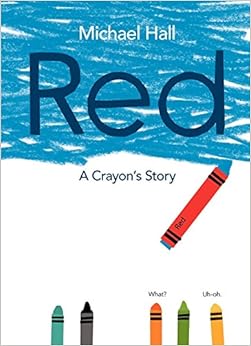
RED: A CRAYON'S STORY BY MICHAEL HALL PRE-K-2


Image result for Red a Crayon's Story image


"He was red...But he wasn't very good at it."


GRADE LEVEL: PRE-K-2
AUTHOR: Michael Hall
BOOK AWARDS: 
(Info gathered from Junior Library Guild)
Goodreads Choice Awards 2015, Picture Books
Booklist Best Picture Books of 2015
Amazon.com Best Books of the Year 2015, Ages 3–5
Booklist Lasting Connections, 2015
2016 CCBC Choices–Picture Books for Babies, Toddlers, and Preschoolers
2016 Rainbow List, Picture Books
2015 Cybils Awards Nomination, Fiction Picture Books
Irma Black Award, 2016 Finalist
2016 E. B. White Read-Aloud Award, Picture Book
Children’s Literature Assembly, 2016 Notable Children’s Books in the English Language Arts
Children’s Book Committee Bank Street College of Education Best Children’s Books of 2016, Under 5


REVIEW 
This is the first book I ever read that I felt helped build empathy and understanding in regards to gender identity. Michael Hall's children's book, Red: A Crayon's Story does not explicitly use words like gender identity, transgender, or nonbinary, but it does help children to see that their labels don't always match their identities.I have read this book with my children, friends' children, and young relatives.The book has prompted some great discussions and questions the children have about the people in their families and communities who don't feel their gender labels match they way they feel on the inside. 

The story follows a crayon that has been labeled red, but that feels blue. Many of the other crayon's in Red's life express opinions and give advice on how Red should handle this very unique feeling. Eventually Red meets Purple and through the friendship begins to feel accepted for his true identity. Eventually the other crayons in Red's life change the messages they give him and Red is able to see how he can be a purposeful and beautiful Blue. 

I have given this book to classroom teachers who have a young trans or gender nonconforming student. As more and more students are socially transitioning at younger ages, teachers can feel confused about how to answer questions from other students who see their friend and classmate socially transition.The book is a wonderful and age appropriate way to begin the discussion with young kids about identity and help them understand that for some people, their identities don't always match their labels. A book like, Red: A Crayon's Story will help share the responsibility of the discussion and give a place for the students' questions to be focused on rather than putting the onus on the child going through the transition. 

CLASSROOM TOOLBOX
  • This book makes for a great read-aloud. The discussions that follows will be rich and meaningful. 
  • As a writing teacher I think this would make a great prompt for a personal narrative. Every kid can relate to feeling of not fitting in. The children could even illustrate their narrative with crayons.
  • The students could write a review of the book or even do a video book review. 
  • Students could write positive messages to Blue. The messages could be displayed on a wall in the classroom. 
LINKS TO OTHER TOOLBOX IDEAS 

A Twitter account with Activity Sheets and Discussion Guides
Teacher's Hub Discussion Guide and Theme 
Pinterest 
Teacher Pay Teacher
Lesson Plan with Common Core

FEEL FREE TO SHARE YOU OWN IDEAS AND CREATIVITY WITH US!